I Got $500 to Share My Experience Moving from California to Minnesota
 Fact Checked by:
Berkeley, CA → St. Paul, MN
$3,529
Priced by linear feet of trailer space
$3,218
$311 under the estimate
2,000 mi
Long-distance, interstate
- I compared four quotes before I hired MovingPlace for my California to Minnesota move, and I had about 10 days to decide.
- My final bill came in $311 under the estimate, and five days before pickup I learned I’d be loading at a freight terminal 15 miles away instead of at my house.
- I shared all of it, my quotes, my bills, and my ratings, as part of moveBuddha’s Better Moves Project.
See what your move really costs before a mover tells you.
Free · no phone calls · real prices from vetted movers
This account is based on a conversation with Matt, who moved from Berkeley, California, to St. Paul, Minnesota, in June 2022 using MovingPlace. The conversation has been edited for length and clarity.
My move from California to Minnesota
We were excited to get our family into a new home in St. Paul, and I knew a 2,000-mile move from Berkeley was going to take serious planning. I had about 10 days to research movers and decide, which is not a lot of runway.
My two real concerns were whether there’d be enough space on the trailer, and whether everything would arrive on time. Everything else I figured I could handle.
I used moveBuddha’s moving cost calculator to compare providers and request quotes, and read the guides on interstate movers, moving containers, and small moves. According to moveBuddha, users who compare movers this way save more than 30% versus taking the first quote they get.
My MovingPlace experience at a glance
Here’s what stood out most about moving with MovingPlace, good and bad.
- Communication: MovingPlace called five days before my scheduled pickup to say the trailer wouldn’t be dropped at my home. I’d have to load at a freight terminal 15 miles away instead, which meant renting a U-Haul and doing far more work than I’d planned for.
- Pricing accuracy and transparency: I paid $3,218 against a $3,529 quote, so it came in under. The last-minute logistics change meant my actual workload was much higher than the price suggests.
- Timeliness: My household goods arrived in Minnesota on the scheduled delivery date, which was a genuine relief after how the California end had gone.
- Professionalism: My representative answered my questions and gave me useful loading tips and trailer parking information up front. The subcontracting is where it came apart.
- Loss and damage: Nothing was lost or damaged. Some settling happened in transit and everything arrived intact.
- Would I use MovingPlace again? Yes. Despite the pickup change, they delivered on time and came in significantly cheaper than anything else I looked at.
under my original MovingPlace quote
Find out what a move from California → Minnesota actually costs before a mover tells you.
Why I chose MovingPlace
I ran Google searches and used moveBuddha to compare providers and request quotes. I got numbers from PODS, Zippy Shell, and U-Pack, and MovingPlace came in lowest by a wide margin.
Their quote covered fuel, transportation, door-to-door delivery, and basic insurance, and it was priced by linear feet of trailer space rather than weight. My rep answered my questions and gave me genuinely helpful loading tips and trailer parking information. Ahead of the move I spent time decluttering, packing, and wrapping our bicycles in moving blankets and stretch wrap. The plan was for MovingPlace to drop the trailer at my house in California, and that changed in a big and unwelcome way days before the move.



 rating


- Best pricing on freight trailers
- Excellent customer service
- Fast long-distance delivery times
- Best Price Guarantee price matching
My move at a glance
Here are the basics of my relocation, including what I was quoted and what I actually paid for my California to Minnesota move.
| Moving from | Berkeley, California |
|---|---|
| Moving to | St. Paul, Minnesota |
| Distance | 2,000 miles |
| Moving company | MovingPlace |
| Moving quote | $3,529 (based on linear feet of trailer space) |
| Actual cost | $3,218 |
We found that when you use moveBuddha’s moving cost calculator, you can save 30% on moving costs compared to customers who go with the first quote they receive.
Quotes I compared
Four companies quoted my move and MovingPlace was the cheapest. The next cheapest option would have cost nearly 50% more and required me to do the driving, which is the trade-off worth understanding before you pick a trailer service over a container.
MovingPlace’s $3,529 is the only figure I kept a record of. What I’d stress is that price and workload are separate questions. The company that quotes lowest may also be the one that hands you the most work, and my move is the illustration.
Pickup day
Five days before the move, MovingPlace called with news I wasn’t expecting. Because of logistical problems on their end, the trailer wouldn’t be coming to my home. I’d have to haul everything to a freight terminal 15 miles away and load it there.
That meant renting a U-Haul and doing a whole extra round of loading and unloading I hadn’t planned for. An early start wasn’t possible either, because the trailer wouldn’t be available until the afternoon.

Loading the U-Haul, unloading it, and getting everything onto the freight trailer took more than 20 hours. It would have taken longer without the go-getter in the blue hat.
Delivery day
Our things arrived in Minnesota 17 days after leaving California. I was told to expect the trailer around 7:30 a.m. on the scheduled day, and the driver showed up as promised.
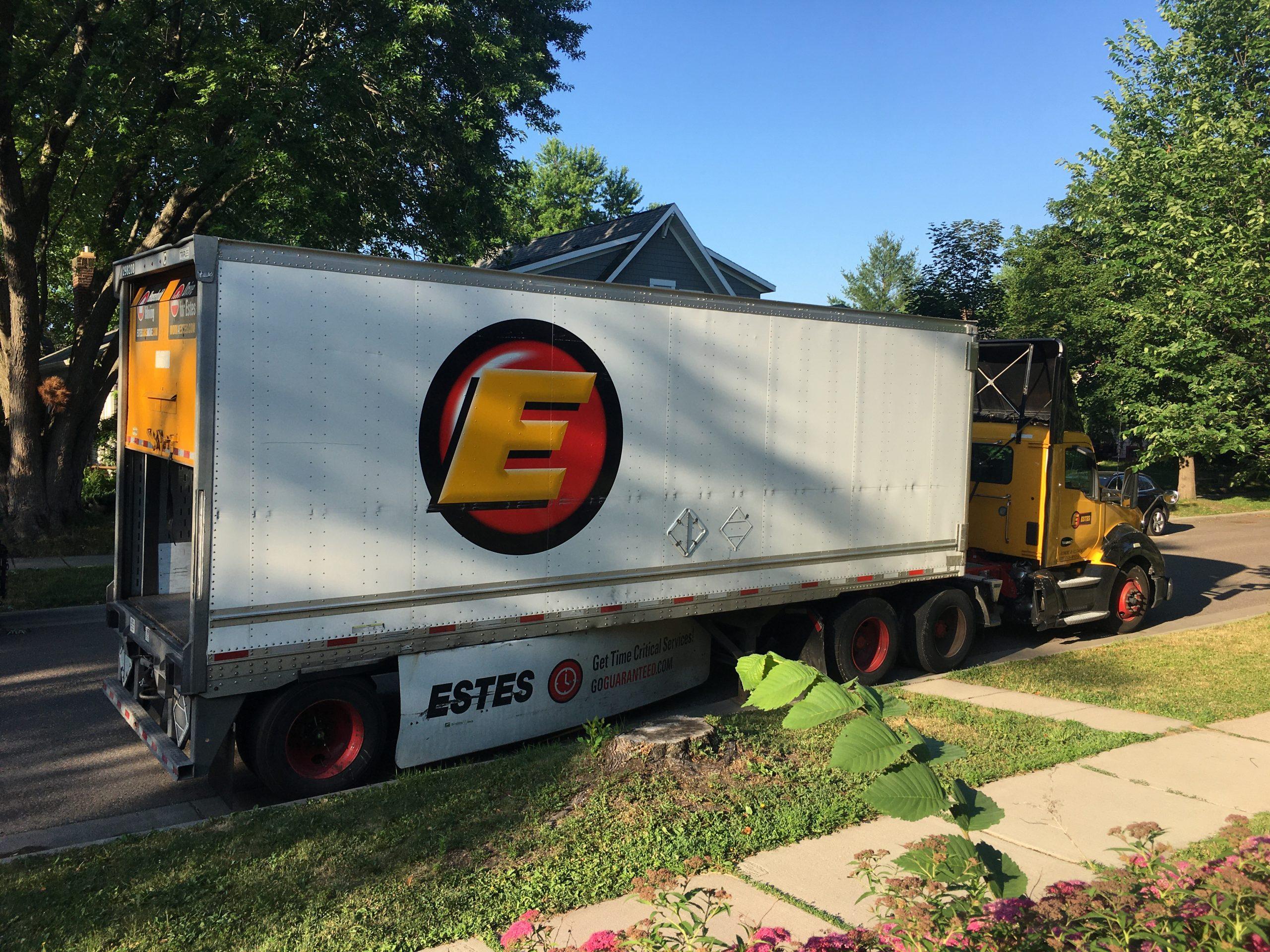
After he dropped the trailer on the street, we set up the ramp, removed the bulkhead, and started carrying everything into the house. Some settling had happened in transit, and nothing was damaged or missing. MovingPlace didn’t follow up afterward to check in.
Final thoughts
My biggest issue is that the trailer wasn’t dropped at my home in California as promised. I had to scramble for a U-Haul and the loading took twice as long as it should have. We got it done, and the move would have been a disaster if we’d been elderly, disabled, or unwilling to put in that extra work ourselves.
Something I only learned later: MovingPlace subcontracted my move to Estes Express Lines, a national less-than-truckload freight carrier. Nothing was damaged, and the trailer was likely built for hauling general freight rather than household goods. That’s worth knowing before you book.
Despite all of it, I’d use MovingPlace again. They delivered on time and my $3,218 total was far below what I was quoted elsewhere. I just wish they’d honored the original commitment to bring the trailer to my house. Moving in mid-June put us squarely in peak season, which is probably the whole explanation.
Planning a long-distance move? Use moveBuddha’s moving cost calculator to compare quotes from top-rated movers and find the best option for your budget.
More moving resources
Tips for future movers
These are the practical steps we recommend based on Matt’s experience:
- Ask what happens if the trailer can’t reach your address: Matt got five days’ notice that he’d be loading at a terminal 15 miles away, which turned into 20-plus hours of work and a U-Haul rental. Ask before booking what the fallback is and who pays for it.
- Find out whether your move will be subcontracted: MovingPlace handed Matt’s shipment to Estes Express Lines, an LTL freight carrier. Ask who is physically hauling your things and what kind of trailer they use.
- Use standard-size boxes and plan your load: Uniform boxes stack and load far more efficiently than a mix of shapes. Knowing what goes in first saves hours and improves weight distribution.
- Fill the gaps so nothing shifts: Matt’s load settled in transit without damage, which is what tight packing buys you across 2,000 miles.
- Start packing earlier than you think you need to: Matt had about 10 days from research to decision. Packing always takes longer than expected, and the final-days rush is avoidable stress.
- Factor in the season: According to moveBuddha’s moving industry statistics, 41% of annual U.S. moves happen between May and August. Matt moved in mid-June, and delays and communication gaps are more common then.
Moving soon? We’ll pay you $500 to tell it like Matt did.
Share your quotes, your final bill, and what actually happened on move day. No script, and we never edit your rating.

Not what you were looking for?
Check out other categories that can help you find the information you need!